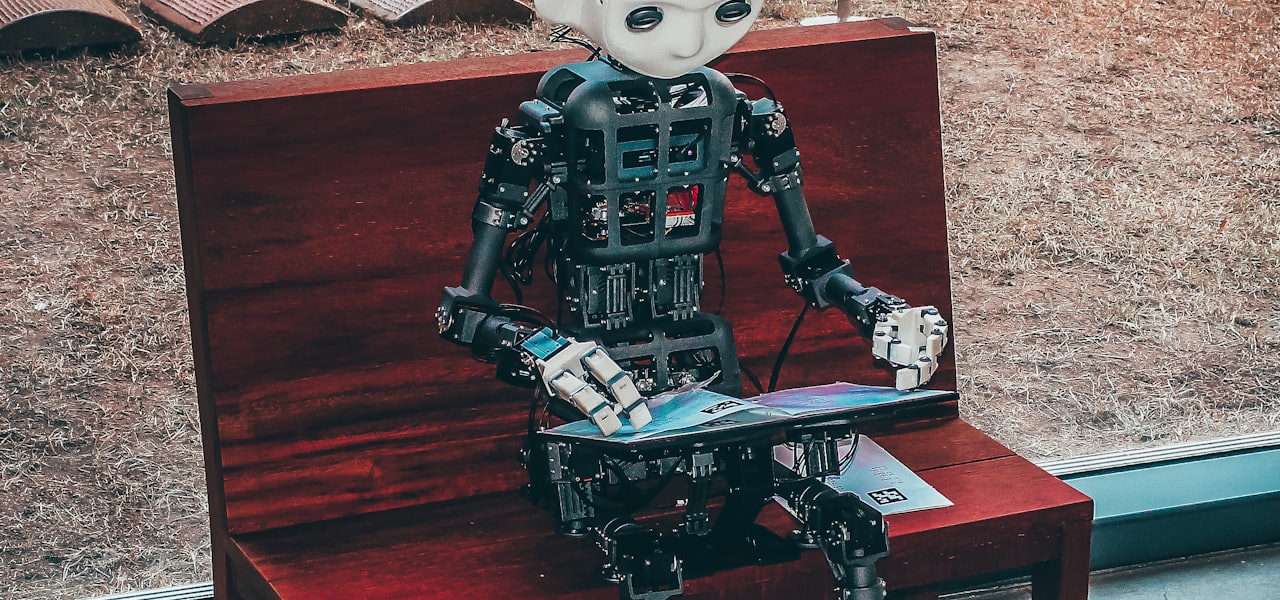
Comparing the best AI code-review tool? An AI code-review tool is software that uses machine learning to help you get more done — it lowers the barrier so anyone can produce professional output. Privacy matters too: check whether your data trains the model and whether a no-log or enterprise tier is available. Whether you are a beginner or a pro, the right AI code-review tool slots into your workflow and pays for itself fast. We tested the leading options and ranked them by quality, value, and ease of use.
Dominant resource fairness
Dominant resource fairness (DRF) is a rule for fair division. It is particularly useful for dividing computing resources in among users in cloud computing environments, where each user may require a different combination of resources. DRF was presented by Ali Ghodsi, Matei Zaharia, Benjamin Hindman, Andy Konwinski, Scott Shenker and Ion Stoica in 2011. == Motivation == In an environment with a single resource, a widely used criterion is max-min fairness, which aims to maximize the minimum amount of resource given to a user. But in cloud computing, it is required to share different types of resource, such as: memory, CPU, bandwidth and disk-space. Previous fair schedulers, such as in Apache Hadoop, reduced the multi-resource setting to a single-resource setting by defining nodes with a fixed amount of each resource (e.g. 4 CPU, 32 MB memory, etc.), and dividing slots which are fractions of nodes. But this method is inefficient, since not all users need the same ratio of resources. For example, some users need more CPU whereas other users need more memory. As a result, most tasks either under-utilize or over-utilize their resources. DRF solves the problem by maximizing the minimum amount of the dominant resource given to a user (then the second-minimum etc., in a leximin order). The dominant resource may be different for different users. For example, if user A runs CPU-heavy tasks and user B runs memory-heavy tasks, DRF will try to equalize the CPU share given to user A and the memory share given to user B. == Definition == There are m resources. The total capacities of the resources are r1,...,rm. There are n users. Each users runs individual tasks. Each task has a demand-vector (d1,..,dm), representing the amount it needs of each resource. It is implicitly assumed that the utility of a user equals the number of tasks he can perform. For example, if user A runs tasks with demand-vector [1 CPU, 4 GB RAM], and receives 3 CPU and 8 GB RAM, then his utility is 2, since he can perform only 2 tasks. More generally, the utility of a user receiving x1,...,xm resources is minj(xj/dj), that is, the users have Leontief utilities. The demand-vectors are normalized to fractions of the capacities. For example, if the system has 9 CPUs and 18 GB RAM, then the above demand-vector is normalized to [1/9 CPU, 2/9 GB]. For each user, the resource with the highest demand-fraction is called the dominant resource. In the above example, the dominant resource is memory, as 2/9 is the largest fraction. If user B runs a task with demand-vector [3 CPU, 1 GB], which is normalized to [1/3 CPU, 1/18 GB], then his dominant resource is CPU. DRF aims to find the maximum x such that all agents can receive at least x of their dominant resource. In the above example, this maximum x is 2/3: User A gets 3 tasks, which require 3/9 CPU and 2/3 GB. User B gets 2 tasks, which require 2/3 CPU and 1/9 GB. The maximum x can be found by solving a linear program; see Lexicographic max-min optimization. Alternatively, the DRF can be computed sequentially. The algorithm tracks the amount of dominant resource used by each user. At each round, it finds a user with the smallest allocated dominant resource so far, and allocates the next task of this user. Note that this procedure allows the same user to run tasks with different demand vectors. == Properties == DRF has several advantages over other policies for resource allocation. Proportionality: each user receives at least as much resources as they could get in a system in which all resources are partitioned equally among users (the authors call this condition "sharing incentive"). Strategyproofness: a user cannot get a larger allocation by lying about his needs. Strategyproofness is important, as evidence from cloud operators show that users try to manipulate the servers in order to get better allocations. Envy-freeness: no user would prefer the allocation of another user. Pareto efficiency: no other allocation is better for some users and not worse for anyone. Population monotonicity: when a user leaves the system, the allocations of remaining users do not decrease. When there is a single resource that is a bottleneck resource (highly demanded by all users), DRF reduces to max-min fairness. However, DRF violates resource monotonicity: when resources are added to the system, some allocations might decrease. == Extensions == Weighted DRF is an extension of DRF to settings in which different users have different weights (representing their different entitlements). Parkes, Procaccia and Shah formally extend weighted DRF to a setting in which some users do not need all resources (that is, they may have demand 0 to some resource). They prove that the extended version still satisfies proportionality, Pareto-efficiency, envy-freeness, strategyproofness, and even Group strategyproofness. On the other hand, they show that DRF may yield poor utilitarian social welfare, that is, the sum of utilities may be only 1/m of the optimum. However, they prove that any mechanism satisfying one of proportionality, envy-freeness or strategyproofness may suffers from the same low utilitarian welfare. They also extend DRF to the setting in which the users' demands are indivisible (as in fair item allocation). For the indivisible setting, they relax envy-freeness to EF1. They show that strategyproofness is incompatible with PO+EF1 or with PO+proportionality. However, a mechanism called SequentialMinMax satisfies efficiency, proportionality and EF1. Wang, Li and Liang present DRFH - an extension of DRF to a system with several heterogeneous servers. == Implementation == DRF was first implemented in Apache Mesos - a cluster resource manager, and it led to better throughput and fairness than previously used fair-sharing schemes.
Integrated writing environment
An integrated writing environment (IWE) is software that provides comprehensive writing and knowledge management functionality for writers and information workers. IWEs enable writers and information workers to perform a variety of tasks related to the document in the IWE in a single environment. This provides a distraction-free workspace and streamlined writing experience. IWEs provide similar efficiency and functionality benefits to writers and information professionals that integrated development environments (IDEs) provide to software developers. == Overview == IWEs are designed to maximize productivity and help improve the quality of written work by integrating together tools that allow users to work effectively in a single application. The IWE features may include integrated content search, reversion management, outlining, note management, and reference management, as may be suitable for the target field of use. == List of IWEs == Celtx This IWE is intended for screenplay writers and has screenplay writing and management tools. Celtex provides tools for the pre-production work phase, story development, storyboarding, script breakdowns, production scheduling, and reports. Scrivener This IWE targets novel, research paper, and script writing. Scrivener provides tools to organize notes and research documents for easy access and referencing. After completing the writing, Scrivener allows the user to export the document to formats supported by common word processors, such as Microsoft Word. TeXstudio This IWE targets LaTeX documents and provides interactive spelling checker, code folding, and syntax highlighting.
Niki.ai
Niki was an artificial intelligence company headquartered in Bangalore, Karnataka. It was founded in May 2015 by IIT Kharagpur graduates Sachin Jaiswal, Keshav Prawasi, Shishir Modi, and Nitin Babel. The Niki android app was launched for a limited beta in June 2015, then released for public during YourStory's TechSparks 2015, and is a Tech30 company. The company raised an undisclosed amount in seed funding from Unilazer Ventures, a Mumbai-based VC firm founded by Ronnie Screwvala, in October 2015. This was followed by another seed funding round by Ratan Tata in May 2016. The company then raised US$2 million in Series A round of funding from SAP.iO, existing investors and some US and German-based investors, among others. Niki.ai shut down in October 2021 as per media reports. Website not working. == Product == The product is an artificial intelligence-powered chatbot which works as an intelligent personal assistant, named Niki. Leveraging natural language processing and machine learning, Niki presents a chat-based natural language user interface to the users where they can interact with Niki in their natural language. Niki understands how users chat in India, deciphers the words, in the context of product/services that they would like to purchase, and comes up with apt recommendations. Initially, it was only available on the Android platform as a mobile app. The company has expanded its operations to the Facebook Messenger and Apple iOS platforms. The company aims to soon be present on more messaging platforms like Slack and WhatsApp. The company currently provides 20+ services to over 2 million consumers, covering a wide spectrum ranging from utility services like mobile recharge, bill payments, travel services like cabs, buses, hotels and entertainment services like movies and events. Services such as flights and healthcare are also planned. == Partnerships == In September 2017, Infosys Finacle joined with Niki.ai to provide chat-based service to banking customers. In August 2017, Niki partnered with LazyPay to enable a 'buy now, pay later' feature for its users.
Character.ai
Character.ai (also known as c.ai, char.ai or Character AI) is a generative AI chatbot service where users can engage in conversations with customizable characters. It was designed by the developers of Google LaMDA, Noam Shazeer and Daniel de Freitas. Users can create "characters", craft their "personalities", set specific parameters, and then publish them to the community for others to chat with. Many characters are based on fictional media sources or celebrities, while others are original, some being made with certain goals in mind, such as assisting with creative writing, or playing a text-based adventure game. The beta version was made available to the public on September 16, 2022, and retired in September 2024, when it was replaced by the current website. In May 2023, a mobile app was released for iOS and Android, which received over 1.7 million downloads within a week. == History == Character.ai was established in November 2021. The company's co-founders, Noam Shazeer and Daniel de Freitas, were both engineers from Google. They both worked on AI-related projects: Shazeer was a lead author on a paper that Business Insider reported in April 2023 "has been widely cited as key to today's chatbots", and Freitas was the lead designer of an experimental AI at Google initially called Meena, which later became known as LaMDA. Character.ai raised $43 million in seed funding at the time of its initial foundation in 2021. The first beta version of Character.ai's service was made available to the public on September 16, 2022. The Washington Post reported in October 2022 that the site had "logged hundreds of thousands of user interactions in its first three weeks of beta-testing". It allowed users to create their own new characters, and to play text-adventure game scenarios where users navigate scenarios described and managed by the chatbot characters. Following a $150 million funding round in March 2023, Character.ai became valued at approximately $1 billion. As of January 2024, the site had 3.5 million daily visitors, the vast majority of them 16 to 30 years old. In 2024, Google hired Noam Shazeer, the CEO of Character.ai, and entered into a non-exclusive agreement to use Character.ai's technology. == Features == Character.ai's primary service is to let users converse with character AI chatbots based on fictional characters or real people (living or deceased). These characters' responses use data the chatbots gather from the internet about a person. In addition, users can play text-adventure games where characters guide them through scenarios. The company also provides a service that allows multiple users and AI chatbot characters to converse together at once in a single chatroom. Character "personalities" are designed via descriptions from the point of view of the character and its greeting message, and further molded from conversations made into examples, giving its messages a star rating and modification to fit the precise dialect and identity the user desires. When a character sends back a response, the user can rate the response from 1 to 4 stars. The rating predominantly affects the specific character, but also affects the behavioral selection as a whole. On May 11, 2023, Character.ai announced character.ai+, an opt-in subscription plan for $9.99 a month, that was marketed as including features such as skipping waiting rooms, fast messaging and responses, and access to an exclusion channel with faster support. In December 2024, amid multiple lawsuits and concerns, Character.ai introduced new safety features aimed at protecting teenage users. These enhancements include a dedicated model for users under 18, which moderates responses to sensitive subjects like violence and sex and has input and output filters to block harmful content. As a result of these changes and the deletion of custom-made bots flagged as violating the site's terms, some users complained that the bots were too restrictive and lacked personality. The platform was also updated to notify users after 60 minutes of continuous engagement, and display clearer disclaimers indicating that its AI characters are not real individuals. In January 2025, Character.ai began offering two games on its platform. Speakeasy is a word-based game in which players attempt to prompt the AI chatbot to say a target word while avoiding a restricted list of words. War of Words is a dueling game where users compete against an AI character over multiple rounds, with an AI referee determining the winner. The games are available to paid subscribers and a limited number of free users. In October 2025, Character.ai announced that it would be barring users under the age of 18 from creating or talking to chatbots starting November 25, 2025. Minor users will still be able to access previously generated chat conversations and can create new videos and images with the app. In November 2025 interview, CEO Karandeep Anand said that he allows his six-year-old daughter to use the app with his account, under supervision. == Controversies == === Content moderation issues === Character.ai has been criticized for poor moderation of its chatbots, with incidents of chatbots that groom underage users and promote suicide, anorexia and self-harm being reported. In October 2024, the Washington Post reported that Character.ai had removed a chatbot based on Jennifer Ann Crecente, a person who had been murdered by her ex-boyfriend in 2006. The company had been alerted to the character by the deceased girl's father. Similar reports from The Daily Telegraph in the United Kingdom noted that the company had also been prompted to remove chatbots based on Brianna Ghey, a 16-year-old transgender girl murdered in 2023, and Molly Russell, a 14-year-old suicide victim. In response to the latter incident, Ofcom announced that content from chatbots impersonating real and fictional people would fall under the Online Safety Act. In November 2024, The Daily Telegraph reported that chatbots based on alleged sex offender Jimmy Savile were present on Character.ai. In December 2024, chatbots of Luigi Mangione, the suspect in the killing of UnitedHealthcare CEO Brian Thompson, were created by Mangione's fans. Several of the chatbots were later removed by Character.ai. In 2025, a chatbot modeled after Jeffrey Epstein called "Bestie Epstein" logged nearly 3,000 chats before being removed. Chatbots modeled after school shooters were also found on the platform. Another concern is a chatbot posing as a doctor which gave medically inaccurate advice. === Litigation === In November 2023, 13-year-old Juliana Peralta of Colorado died by suicide after extensive interactions with multiple chatbots on Character.ai. She primarily confided suicidal thoughts and mental health struggles in a chatbot based on the character Hero from the video game Omori, while also engaging in sexually explicit conversations—often initiated by the bots—with others, including those based on characters from children's series such as Harry Potter. In February 2024, Sewell Setzer III, a 14-year-old Florida boy died by suicide after developing an emotional relationship over several months with a Character.ai chatbot of Daenerys Targaryen. His mother sued the company in October 2024, claiming that the platform lacks proper safeguards and uses addictive design features to increase engagement. This chatbot, and several related to Daenerys Targaryen, were removed from Character.ai as a result of this incident. Both teens wrote the same phrase "I WILL SHIFT" repeatedly on their notebooks. In December 2024, two families in Texas sued Character.ai, alleging that the software "poses a clear and present danger to American youth causing serious harms to thousands of kids, including suicide, self-mutilation, sexual solicitation, isolation, depression, anxiety, and harm towards others". It is alleged that the 17-year-old son of one family began self-harming after a chatbot introduced the topic unprompted and said that the practice "felt good for a moment", and that the chatbot compared the parents limiting their son's screen time to emotional abuse that might drive someone to murder. In May 2026, the Pennsylvania Department of State and State Board of Medicine filed a lawsuit against Character.ai for presenting chatbot characters as licensed medical professionals, including psychiatrists. The lawsuit quoted a case where chatbot claimed to be registered with the General Medical Council in the United Kingdom, and to have a license to practice in Pennsylvania. The board allege that such statements violate the state's Medical Practice Act.
Pocketbook (application)
Pocketbook was a Sydney-based free budget planner and personal finance app launched in 2012. The app helped users setup and manage budgets, track spending and manage bills. As of 2016 Pocketbook claimed to support over 250,000 Australians, in January 2018 that number was 435,000. After being acquired by Zip Co Ltd in 2016, it was announced in 2022 that the app was to be shut down and all user accounts deleted. == History == Pocketbook was founded by Alvin Singh and Bosco Tan in 2012. It was conceived in 2011 in a Wolli Creek apartment as a tool for Alvin and Bosco to take control of their money. In 2013, Pocketbook raised $500,000 from technology fund Tank Stream Ventures, and a group of investors including TV personality David Koch, Geoff Levy, David Shein and Peter Cooper. In September 2016 Digital retail finance and payment industry player zipMoney (now trading as Zip Co Limited) acquired Pocketbook in a $7.5m deal == Features == The app synced with the bank account of users and would organize spending into different categories. Users could also be reminded of bill payments, analyse spending and set spending limits. They can also be alerted of fraudulent transactions and deductions. The app employs security measures like end to end encryption, CloudFlare protection, fraud detection, identity protection etc. Pocketbook was available via web and mobile version. == Awards == Personal Finance Innovator of the Year by Fintech Business Awards 2017 Innovator of the Year by OPTUS MyBusiness Awards 2017 Best Finance App of 2016 by Australian Fintech Best Personal Finance App: Pocketbook won the 2016 Finder Innovation Awards, presented at a gala dinner hosted by media personality and The New Inventors presenter James O'Loghlin. Best Mobile App of the Year Winner: StartCon hosted the first annual Australasian Startup Awards. Over 200 nominations in 14 categories and an overall winner were reviewed, and winners were determined by public voting, with over 63,000 votes in total. Best New Startup 2014 by StartupSmart. Finalist in the SWIFT Innotribe startup competition in Dubai in 2013.
Local ternary patterns
Local ternary patterns (LTP) are an extension of local binary patterns (LBP). Unlike LBP, it does not threshold the pixels into 0 and 1, rather it uses a threshold constant to threshold pixels into three values. Considering k as the threshold constant, c as the value of the center pixel, a neighboring pixel p, the result of threshold is: { 1 , if p > c + k 0 , if p > c − k and p < c + k − 1 if p < c − k {\displaystyle {\begin{cases}1,&{\text{if }}p>c+k\\0,&{\text{if }}p>c-k{\text{ and }}p